
Battery storage
When the grid goes down, yours does not have to.
A home battery keeps the fridge cold, the well pump running and the lights on through an outage, and stores your own solar for the hours the sun is not out. FranklinWH, Enphase and Tesla, installed by our crews.
Why a battery
What a home battery actually does.
Two things. It keeps the power your roof makes at midday for the evening, and it keeps the house running when the grid does not.
Every day
Your own power, after dark
Panels make more than the house uses at midday. Without a battery that surplus goes to the utility and comes back as a bill credit. With one, it stays home and runs the evening.
When the grid goes down
The house keeps running
A solar system alone shuts off in an outage, for the safety of line crews. Add a battery and the fridge and freezer, the well pump, the Wi-Fi, a bedroom AC and the medical equipment stay on.
- Outage protection. Refrigeration, lighting, communications, medical equipment, security and appropriately sized air conditioning stay on.
- Solar during an outage. A compatible system recharges from sunlight while isolated from the grid, so backup outlasts the first discharge.
- Quiet and automatic. No fuel, no engine noise, no exhaust, no manual generator start.
- Storm preparation. Supported products raise the backup reserve ahead of forecast severe weather.
- Scalable. Add units later when the electrical design and space allow.
- From the Florida Solar Battery Buyer’s Guide.
Sized to what matters
What stays on is a design decision.
One battery covers the essentials. Two or three cover the house. We size it to what you actually need to keep running, not to a brochure.
Essentials
One battery
Refrigerator and freezer, lights, Wi-Fi and phones, the well pump or sump. One unit holds 10 to 15 kWh, which carries these through the night.
Comfort
Two batteries
Everything above plus a bedroom or main-floor air conditioner, the garage door and the water heater cycling as needed.
Whole home
Three or more
Central air, the pool pump, the kitchen. The house runs normally and recharges from the roof every morning the sun is out.
Add later
Stackable
Both brands stack. Start with one now and add a second in a year. Batteries can also be added to a solar system we or anyone else installed.
What it will not do
Four limits worth knowing before you buy.
Runtime
A battery is not unlimited
Central air, electric water heating, cooking, EV charging and pool equipment can drain one unit quickly. The design decides what runs, for how long.
Sizing
“Whole home” is a label, not a guarantee
It does not mean every appliance runs at once. Starting current and total continuous load have to be checked against the battery’s numbers.
Siting
Florida heat and flooding matter
High temperatures reduce output and accelerate aging. Equipment goes within manufacturer limits, outside avoidable flood exposure, with required clearances kept.
Long outages
Multi-day events take management
Conserve, raise the thermostat, switch off nonessential loads, and let daytime solar recharge the battery. We set the system up to make that easy.
The full list, with warranty and tariff caveats, is in the guide.
The hardware
Three batteries we install and stand behind.
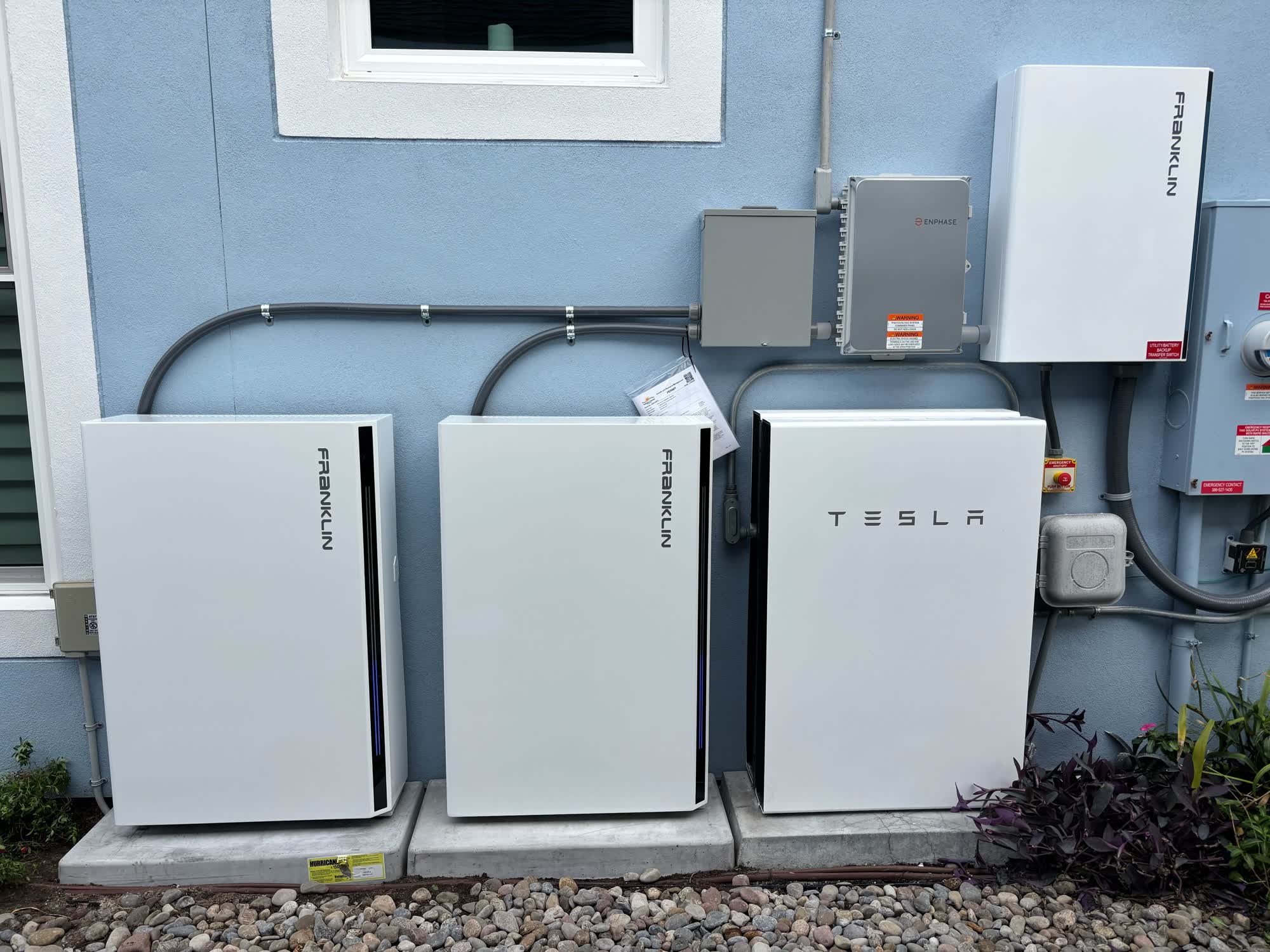
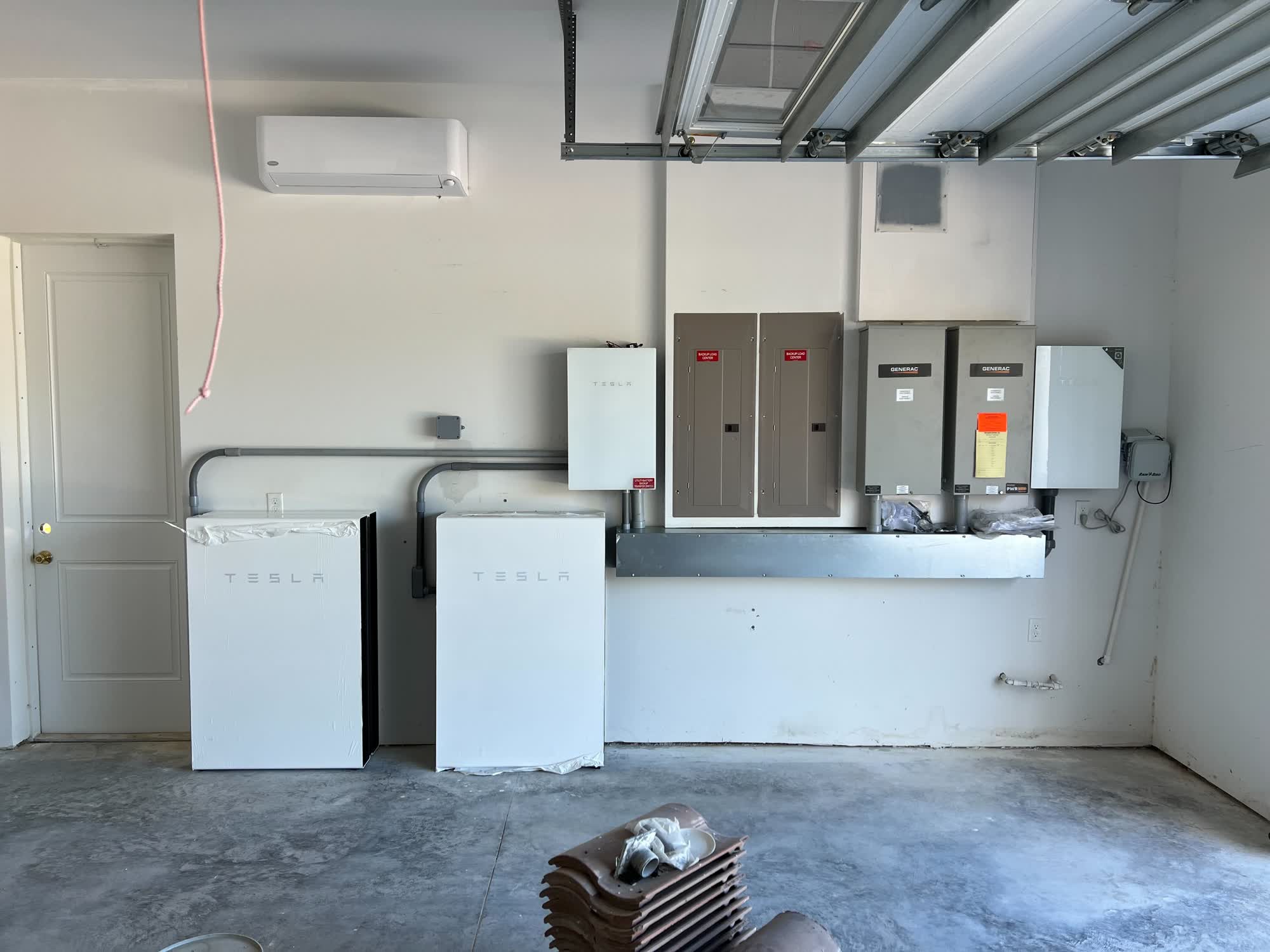
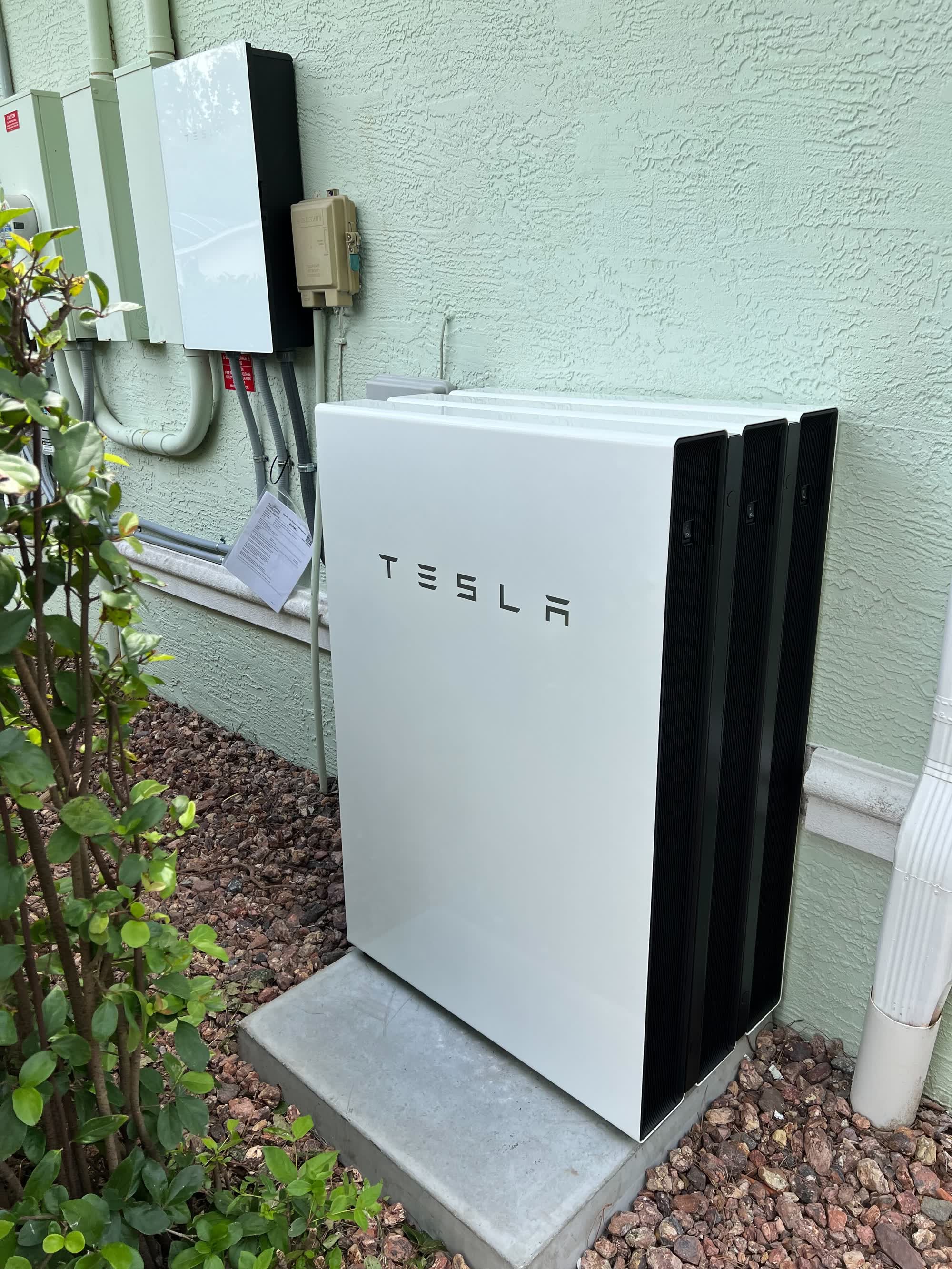
Ranked for Florida on reliability, serviceability, warranty and the ability to start air conditioners and pumps. Indoors in a garage or outdoors on an exterior wall: the final location has to satisfy the manufacturer, the electrical and fire codes, the building department and the utility, and we handle all four. Serviced by the crews that installed them.
1
FranklinWH aPower 2
15 kWh · 10 kW · 15-year warranty. Lithium iron phosphate, passive cooling, rated to start a 5-ton AC. The aGate panel coordinates solar, batteries, a generator and individual circuits. Our first choice for whole-home backup and for adding to solar you already have.
2
Enphase IQ Battery 10C
10 kWh · 7.1 kW · 15-year warranty. Cobalt-free LFP in a modular, microinverter design that scales one unit at a time. The natural fit for Enphase solar, and now supported on other brands too.
3
Tesla Powerwall 3
13.5 kWh · up to 11.5 kW · 10-year warranty. The most power from a single cabinet, with the solar inverter built in and Storm Watch that charges to full ahead of severe weather. Best on a new solar-plus-battery build.
+
With or without solar
With solar, the roof recharges the battery every morning the sun is out. Without it, a battery still carries the house through an outage, charging from the grid ahead of a storm. Solar can be added later.
Storm season
The outage is not the emergency. The fourth day is.
Size the system around the loads that protect health, safety and comfort. One battery can run essential circuits for many hours, but central air dominates consumption. For longer storm outages that means multiple batteries, automatic load management, a higher thermostat setting, and a roof that recharges the battery each morning.
Size a system for my house
Incentives
What a battery does and does not earn you.
At home: Florida’s sales-tax and property-tax treatment applies to qualifying solar equipment; whether a stand-alone battery qualifies depends on the system, so we confirm it before it goes on a quote. Paired with your array, a battery keeps more of your own power at home instead of exporting it at the utility’s terms. Your rep will walk you through exactly what applies to your system.
For a business, church or municipality: storage kept its 30% federal credit beyond the 2027 solar sunset, and tax-exempt owners can receive it as a direct payment. See the commercial credit and Direct Pay.
The buyer’s guide
Everything you need to know before you buy a battery.
Written by Solar-Fit, backed by 17 manufacturer and government sources. Chemistry, warranties, Florida siting and the ten questions to ask, in plain language.
Capacity vs. power
The two numbers on the spec sheet that most bad purchases confuse, and a runtime rule of thumb.
Three batteries, compared
FranklinWH, Enphase and Tesla side by side: energy, output, chemistry, warranty, best fit.
Ten questions before you buy
From which circuits must stay on to who handles the warranty claim. We answer them with you.
Free assessment
Tell us what has to stay on. We will tell you what it takes.
Which circuits matter, how long you want to ride out, and whether you have solar already or want it. We come back with a sized system and real numbers, installed by our own crews.
- No cost, no obligation
- Franklin or Tesla, indoor or outdoor
- Works with the solar you already have
- Straight answer either way